
Architecture & AI Readiness Assessment
1–2 weeks · Fixed price
A review of the current landscape, the concrete AI levers, and a short roadmap with a presentation.
Discuss this engagement →e-Softworks
We help enterprises embed controlled AI (local models, RAG, guardrails, data integrity) without exploding headcount or compliance risk.
Focus: critical infrastructure, energy, regulated environments.
Engagements
Three ways to start. The scope is fixed. No rate card.
1–2 weeks · Fixed price
A review of the current landscape, the concrete AI levers, and a short roadmap with a presentation.
Discuss this engagement →Fixed price or a clear scope
Examples: local RAG on existing data, a guardrails layer, or a data-integrity component.
Discuss this engagement →2–4 days per month
Ongoing architecture sparring, a review of AI initiatives, and coaching for the team.
Discuss this engagement →
Provable 15-minute Istwerte for Redispatch and flexibility — beside SCADA and the Energy Management System (EMS). Cadenza is the fabric; Leitungstreu is the German product line.
Outcome: a quarter-hour Istwert stays checkable beside SCADA and the EMS. Neither is replaced.
A Go agent signs the canonical payload hash (Ed25519). Private keys stay at the edge. Tag: Cadenza-Attestation-v1.
The Spring Boot core never mints source signatures. It verifies, then stores append-only.
Leaves are sealed; roots go to an independent RFC 3161 timestamping authority. Not a blockchain.
GRUEN / GELB / ROT on the Quellenkarte. Three-party room: Anlage, Vermarkter, VNB; ISB reads.
de.grid.telemetry.v1 · Ed25519 · Merkle · RFC 3161 · Java 21 · Go · PostgreSQL · React
Provable data integrity for critical energy infrastructure — prove operational data is authentic and unchanged — even against the operator, and without a blockchain.
Outcome: a reading can be shown authentic and unchanged, including against the operator, without a blockchain.
Every reading is Ed25519-signed at the edge over its payload and metadata.
Records are bound into a Merkle tree; altering one changes the root fingerprint.
Roots are timestamped by an independent RFC 3161 authority — a neutral witness.
Ed25519 · Merkle provenance · RFC 3161 anchoring · Java 21 · Spring Boot · Go · PostgreSQL · React
CISSP-aligned security architecture
Enterprise resource planning for one operator, with a separate ledger per company. Finance, people, and time on a server you run. Not a shared multi-customer service.
Outcome: one operator, a separate ledger per company, on a server you run.
Each company keeps its own ledger. Create the company, switch to it, and read income, expenses, and net the same day. Not a shared ledger across customers.
Granular permissions with custom roles. JWT-authenticated API, API keys with rate limiting, and optional wallet signatures.
Append-only security logs, Merkle-provenance audit pages, and tenant-scoped data isolation for regulatory compliance.
Create a company, switch to it in the header, and keep that company's ledger apart from the others.
Journal entries and a CSV import feed a dashboard of income, expenses, and net, plus GAAP-like and GoB-like management reports.
Employees, clients, engagements, timesheets, and utilization sit beside the ledger, with built-in and custom roles.
Aurora runs on premises or in a private cloud. It is built for one operator, with a separate ledger per company.
Java 21 · Spring Boot · PostgreSQL · React · Docker · JWT · Ed25519 (wallet auth) · Flyway
CISSP-aligned security architecture
Event-driven etiCORE eTicket for public transport — buy, activate, and validate tickets, with fleet and control-centre operations in one system.
Outcome: issue, activate, and validate a fare in one event-driven system.
Purchase a fare product for the chosen zone; the ticket and supporting document are recorded in the system.
Start the validity window when travel begins so the ticket is ready to show.
Check the ticket against an optional vehicle — for inspection and operational control.
Java · Spring Boot · PostgreSQL · React · RabbitMQ (event-driven path) · Docker · VDV / etiCORE-oriented
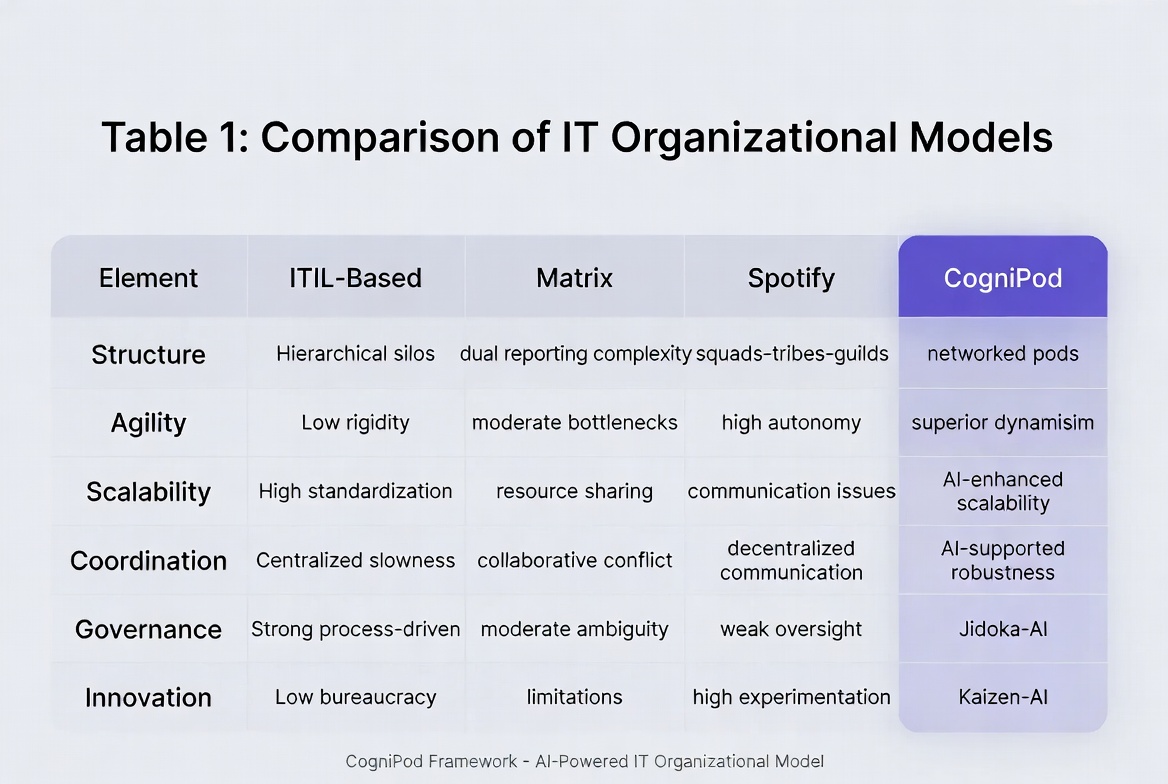
CogniPod
The AI-Powered IT Organizational Framework • Networked pods, extensible workflows, unified knowledge platform & AI-driven coordination enriched with lean principles.
Exploring secure, decentralized intelligence. This Proof of Concept investigates how Blockchain and Artificial Intelligence can be combined for immutable, transparent, and auditable workflows on top of our proven Java architecture. It is an experimental prototype — not a production product.
AI models executed via smart contracts with full auditability and immutability.
AI-enhanced automation for dynamic, context-aware business logic.
Privacy-preserving data sharing that fuels powerful AI insights.
Seamless connection to Spring Boot, microservices, Kafka, and hybrid cloud environments.
Built with Java · Spring Boot · Blockchain (Hyperledger/Ethereum-compatible) · Modern AI tooling
AI Architecture
Empirical research on embedding autonomous agents as first-class architectural elements — three case studies across software, banking, and healthcare.
When AI agents are embedded at a defined operational bottleneck — not sprinkled onto every process — organizations achieve dramatic improvements in that bottleneck's productivity, quality, and cost. The pattern holds across software development, financial services, and healthcare.
Layer 5: Observability & Governance
Layer 4: Automation & Execution
Layer 3: Decision & Policy
Layer 2: AI Model & Agent
Layer 1: Data & Knowledge
Data flows upward; governance flows downward. This bidirectional pattern distinguishes architecture from tool-level AI.
Capabilities
Tailored solutions that drive real business value
Strategy, architecture, model selection and production deployment of AI solutions.
Modern, performant, and maintainable enterprise Java systems — often integrated with AI workloads.
Custom models, fine-tuning, RAG pipelines, inference optimization and responsible AI practices.
We integrate AI, Java, and legacy systems to create seamless digital ecosystems. API development, middleware engineering, cross-platform compatibility, and smooth data flows between modern cloud services and on-premise environments are our core strengths.
RESTful & GraphQL APIs, secure authentication (OAuth/JWT), rate limiting, OpenAPI documentation, and API gateways.
Kafka, RabbitMQ, Spring Integration, event-driven architecture, and orchestration with Kubernetes operators or cloud-native tools.
Strangler fig pattern, microservices extraction, data migration (ETL/CDC), hybrid cloud connectivity, and zero-downtime transitions.
Mission
Delivering transformative technology solutions that enable sustainable growth and competitive advantage.
To be the global leader in secure AI and Java consulting services.

About
Founder & Lead Architect at e-Softworks
Oliver Bodemer is an Enterprise Java Architect with more than 23 years of hands-on experience in building scalable, mission-critical systems. As a passionate AI tinkerer and blockchain enthusiast, he combines deep technical expertise with strategic business insight to deliver transformative solutions.
Holding a Master of Business Administration (MBA), Oliver has authored research on integrating AI and blockchain into enterprise software, insurance, sports technology, and decentralized innovation. His work focuses on practical, high-impact applications — from modernizing legacy Java systems to designing AI-powered architectures and secure blockchain integrations.
At e-Softworks, Oliver is Founder and Lead Architect. Cadenza and Leitungstreu are production systems beside the consulting work: the proof is the software, not a service list alone.
Oliver runs DailyAIWizard, a YouTube channel with 140,000+ subscribers, covering Cloud AI, software architecture, and the CogniPod Framework.
Oliver is the creator of the CogniPod Framework, a transformative AI-driven organizational model that integrates networked pods, extensible workflows, unified knowledge platforms, and lean principles to deliver superior agility, scalability, and innovation in IT project execution.
e-Softworks, Inc.
1401 21st St Ste R
Sacramento, CA 95811
United States
Represented by Oliver Bodemer
Founder & Lead Consultant
Contact: Contact form
or via the links in the header/footer.
The information on this website is provided for general informational purposes only. e-Softworks, Inc. makes no representations or warranties of any kind, express or implied, about the completeness, accuracy, reliability, suitability, or availability of the website or the information contained on the website for any purpose. Any reliance you place on such information is strictly at your own risk.
© 2026 e-Softworks, Inc. All rights reserved.
This site can record a first-party visit count (VisitorTrack) with your IP, browser, and page path so we can see which countries use the site. No advertising network is involved. Essential pages work without it. Privacy policy.